Legends of Yesteryear
Tony Gwynn: The Greatest Pure Hitter I Ever Saw, And a Style Baseball Should Never Forget

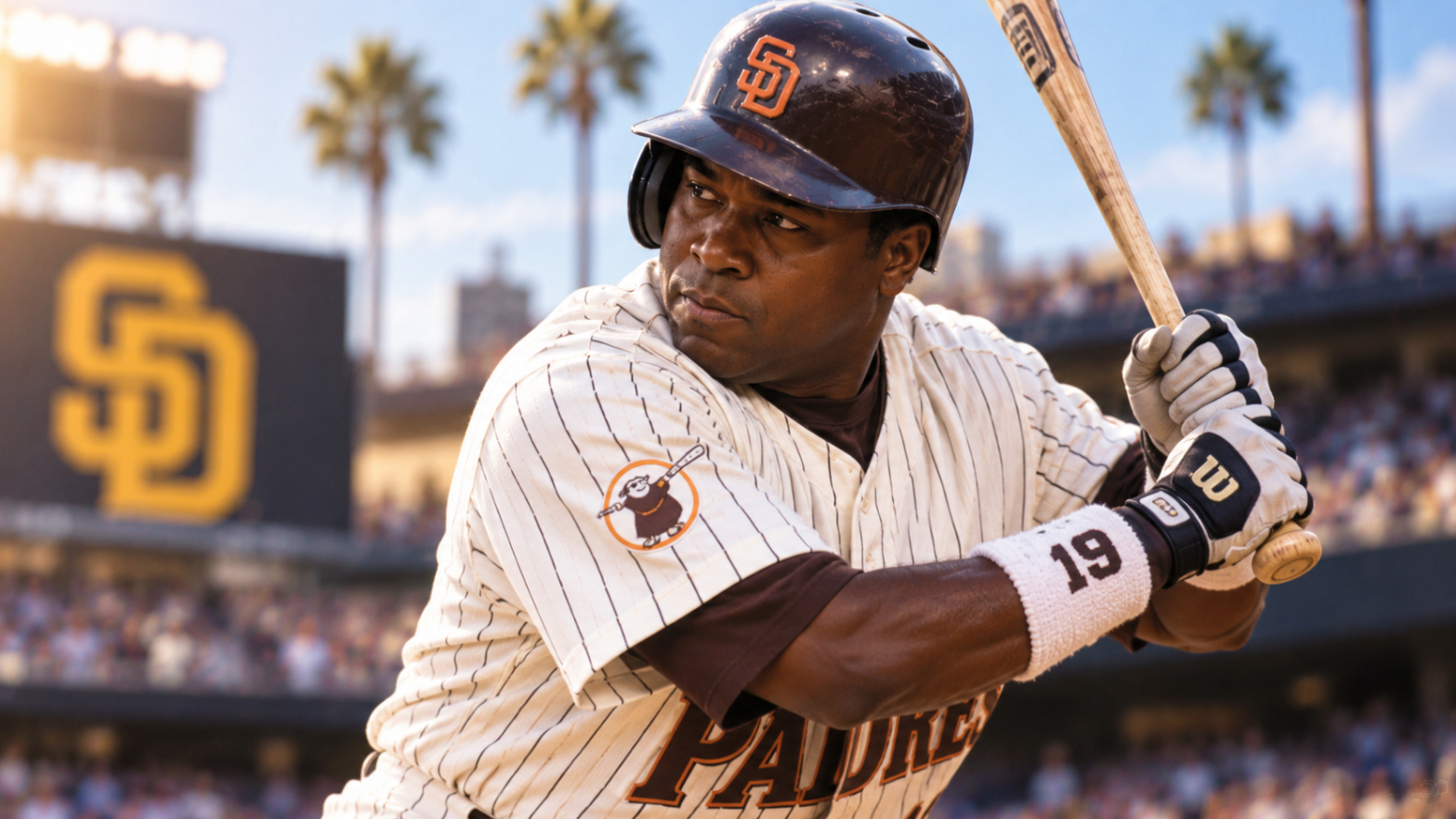
When people debate the greatest hitters in baseball history, there are plenty of names that deserve to be part of the conversation. Ted Williams, Ty Cobb, Rogers Hornsby, Stan Musial, Pete Rose and others all put together careers that seem almost impossible when you look back at them today. But when I think about the greatest pure hitter to ever play the game, one name has always stood apart to me: Tony Gwynn.
Gwynn didn’t need to hit 40 or 50 home runs every season, and he didn’t build his career around power. His job was much simpler. See the baseball, put the barrel on it and make the defense stop him. For 20 seasons with the San Diego Padres, that proved to be extremely difficult.
Twenty Years in San Diego
Gwynn was drafted by the Padres in 1981 and made his Major League debut the following season. He would spend his entire career in San Diego, playing from 1982 through 2001 and becoming one of the greatest players in franchise history. His rookie season would turn out to be the only year of his career in which he failed to hit .300. In 54 games and 209 plate appearances, Gwynn batted .289 with 55 hits, 12 doubles, two triples, one home run and 17 RBIs while striking out only 16 times.
By 1983, Gwynn had already pushed his average above .300, hitting .309, and from that point forward he never looked back. He would win eight National League batting titles and become one of the most consistent hitters the game has ever seen. His career batting average finished at .338, and he collected 3,141 hits, 543 doubles, 85 triples, 135 home runs and 1,138 RBIs. He also stole 319 bases and drew 790 walks, showing that there was much more to his game than simply slapping singles around the field.
The Numbers Still Don’t Look Real
There are certain Tony Gwynn seasons that almost don’t look believable when you read the numbers today. In 1986, he played 160 games and collected 211 hits. In the strike-shortened 1994 season, Gwynn played only 110 games and still finished with 165 hits while batting .394. That season ended early because of the players’ strike, leaving baseball fans forever wondering whether Gwynn might have made a serious run at .400.
The following season was another remarkable example of his ability to control the strike zone and make contact. In 1995, Gwynn hit .368 with 197 hits in 135 games and struck out only 15 times in 535 at-bats. Then in 1997, at 37 years old, he somehow put together one of the best offensive seasons of his career. Gwynn collected a career-high 220 hits in 149 games, hit .372, finished with 49 doubles, 17 home runs and drove in 119 runs. Those 17 home runs were the most he ever hit in a season, yet he still managed to drive in nearly 120 runs without becoming a traditional power hitter.
That is what made Gwynn so special. He didn’t need to change who he was in order to produce runs. He hit line drives, found gaps, used the entire field and constantly put pressure on the defense. He didn’t have to hit the ball 450 feet when a line drive into the gap accomplished exactly what his team needed.
The Strikeout Numbers May Be the Most Amazing Part
Of everything Tony Gwynn accomplished, his strikeout numbers may be the statistic that stands out the most. Over 20 Major League seasons and more than 10,000 plate appearances, Gwynn struck out only 434 times. He never struck out more than 40 times in a season, with his career high coming in 1988. Even that year, he still batted .313 and collected 163 hits.
Think about what that means. Gwynn played 2,440 Major League games and stepped to the plate more than 10,000 times, yet pitchers were able to strike him out only 434 times. There are hitters today who can approach 150 or 200 strikeouts in a single season. Gwynn could go several seasons before accumulating numbers like that.
Even with two strikes, Gwynn remained incredibly difficult to put away. Over his career, he hit roughly .300 in two-strike situations. Instead of becoming helpless once the count turned against him, he adjusted. He shortened his approach, protected the plate and found a way to put the baseball in play. That ability is something I wish more young hitters today would study.
His Longest Hitting Streak Was 25 Games
Considering how many hits Gwynn accumulated, I was curious about the longest hitting streak of his career. Surprisingly, it wasn’t 35 or 40 games. Gwynn’s longest streak was 25 games during the 1983 season. He also put together several other long streaks throughout his career, but none surpassed that mark.
In a strange way, that actually makes his career even more impressive. Gwynn didn’t reach 3,141 hits because of one unbelievable month when everything fell perfectly into place. He reached that number because he hit consistently for two decades. He was the type of player who could quietly collect two hits on Tuesday, three on Wednesday, another two on Friday and just keep stacking them up throughout an entire season.
The multi-hit games tell that story better than almost anything else. In 1984, when Gwynn won his first batting championship, he collected 213 hits and had 69 multi-hit games. In 1985, he had another 63 multi-hit games. During that tremendous 1997 season, he had 67 multi-hit games. With Gwynn, it wasn’t always about having one enormous streak. It was about showing up almost every night and finding a way to put the barrel on the baseball.
Tony Gwynn Was a Student of Hitting
Gwynn wasn’t simply blessed with incredible hand-eye coordination. He studied hitting constantly. He became famous for reviewing video of his at-bats long before video rooms, tablets and instant digital analysis became normal throughout baseball. He studied pitchers, studied his swing and studied the way teams were trying to get him out.
That may be one of the biggest lessons young hitters can learn from Tony Gwynn. He wasn’t satisfied simply knowing that he could hit. He wanted to understand why he was successful. He paid attention to where his hands were, where his weight was going and how pitchers were approaching him. He became known for using the area between third base and shortstop, something he famously referred to as the “5.5 hole,” and he was perfectly comfortable taking what the pitcher gave him instead of trying to pull everything.
His swing wasn’t built around trying to create maximum exit velocity. It was built around control. His hands stayed through the baseball, his head remained on the ball and he consistently used the entire field. He understood that the goal of hitting wasn’t always to create the loudest contact. The goal was to reach base.
Baseball Doesn’t Always Need a Home Run
Today’s game is built around power, launch angle, exit velocity and trying to drive the baseball over the fence. There is nothing wrong with home runs, and every team obviously wants players who can hit for power. But somewhere along the way, baseball started treating singles as though they weren’t valuable enough.
Tony Gwynn is proof that there is another way to dominate offensively. A bloop single still puts a runner on first base. A line drive through the hole still counts as a hit. A ball driven into the gap can turn into a double or triple. Keep putting runners on base and eventually runs are going to score.
Gwynn understood that better than almost anyone. His career high was only 17 home runs, yet that same season he drove in 119 runs. He didn’t need to change his swing or completely reinvent himself to produce. He simply kept hitting baseballs where defenders weren’t standing.
That style seems almost forgotten sometimes. Today we hear so much about power and velocity that simply making consistent contact can feel like an old-fashioned idea. But baseball has never stopped rewarding hitters who get on base. A runner standing on first after a clean single has exactly the same opportunity to score whether that baseball left the bat at 75 miles per hour or 110.
The MVP He Never Won
One award Tony Gwynn never received was the National League MVP. His closest finish came in 1984, when he finished third after batting .351, leading the league with 213 hits and helping the Padres reach the World Series. Considering everything he accomplished during his career, it is surprising that he never won the award.
Gwynn still built a résumé that requires no defending. He was selected to 15 All-Star teams, won eight batting championships, earned seven Silver Slugger Awards and five Gold Gloves. He finished with more than 3,000 hits, a .338 lifetime average and one of the lowest strikeout rates anyone will ever see from a player with that many plate appearances.
When Gwynn became eligible for the Baseball Hall of Fame, there was never much doubt about what would happen. He was elected in 2007 with 97.6 percent of the vote, just six years after playing his final Major League game.
The Kind of Hitter Baseball Should Still Be Teaching
Tony Gwynn passed away in 2014 at only 54 years old, and that makes looking back at his career a little bittersweet. I often wonder what he would think about today’s game and how hitting has changed. I also wonder what he could teach today’s players if he were standing around a batting cage explaining what he saw when a pitcher released the baseball.
Maybe Gwynn never would have wanted to become a Major League hitting coach, because being a great player doesn’t automatically mean somebody wants to coach. But imagine being a young hitter and having Tony Gwynn explain how he protected the plate with two strikes, how he recognized pitches, how he kept his hands inside the baseball and why he wasn’t afraid to shoot an outside pitch through the opposite side.
Those are skills baseball should never lose.
There have been greater power hitters, and there have been players from earlier eras who finished with higher career batting averages. Baseball history is filled with incredible offensive players, and everyone can have their own opinion about who belongs at the top.
But when I think about the pure ability to put a bat on a baseball, I keep coming back to Tony Gwynn. He played 20 seasons and hit under .300 only once. He accumulated 3,141 hits while striking out only 434 times. He won eight batting championships and came within six points of hitting .400 in 1994.
He didn’t overpower baseball. He understood it.
Tony Gwynn saw the ball, trusted his hands, put the barrel on it and let the game take care of the rest. There may never be another hitter quite like him, but there should always be young players trying to learn from the way he approached the game.


