NASCAR
Learning NASCAR: What Does “Flipping the Stage” Mean in NASCAR?
A New Fan’s Guide to Understanding the Race

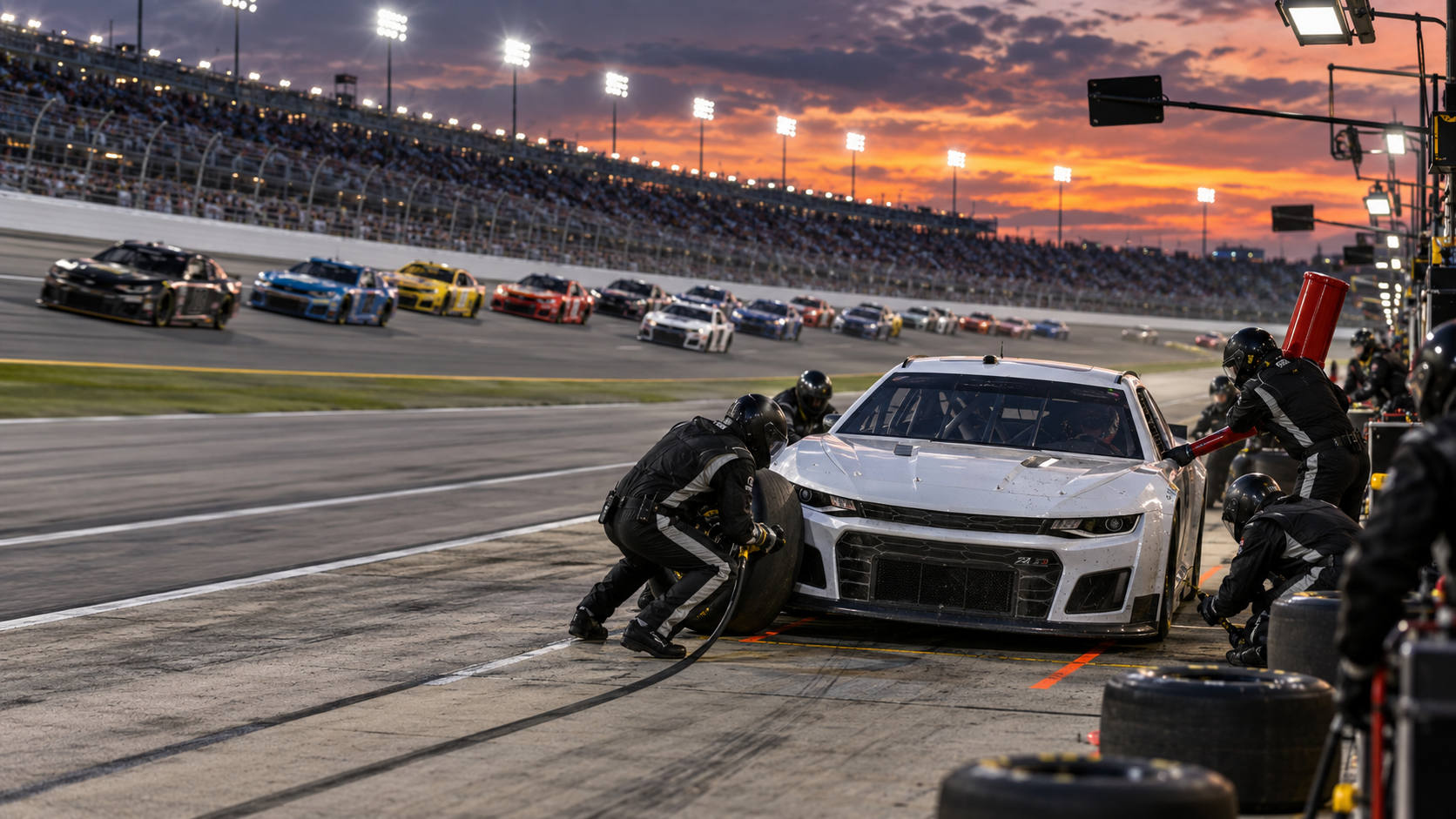
In this edition of our Learning NASCAR series, we are looking at a strategy called “flipping the stage.” It may sound complicated, but it simply means changing when a team makes its pit stop.
Most NASCAR races are divided into stages. When a stage ends, the top 10 drivers receive stage points, and the field slows under caution. Many teams then enter pit road for tires and fuel before the next stage begins. Flipping the stage means making that pit stop shortly before the stage ends instead.
A driver using this strategy usually gives up the opportunity to earn stage points. While the leaders remain on the track fighting for those points, the driver comes to pit road for service. After the stage ends and the leaders make their pit stops, the driver who pitted early can remain on the track and move much closer to the front for the next restart.
It becomes a choice between two different rewards. Staying out until the end of the stage provides an opportunity to collect points. Pitting early can provide better track position for the next portion of the race. A driver deep in the field with little chance of reaching the top 10 may have less to lose by flipping the stage. A Chase driver running near the front might be less willing to surrender valuable stage points.
There is also plenty of risk involved. During a green-flag pit stop, the driver temporarily falls behind the cars that remain on the track. If a caution comes out at the wrong time, that driver could become trapped a lap down. The team must also determine whether the car can make it far enough on fuel after stopping early.
Imagine a driver running 17th with eight laps remaining in Stage 1. The crew chief knows the driver is unlikely to reach the top 10 and score stage points, so the team pits early for four tires and fuel. When the stage ends, most of the leaders pit. Instead of following them, the 17th-place driver stays out and could restart Stage 2 inside the top five.
Flipping the stage does not make the car faster, and it does not guarantee a good finish. It is a calculated attempt to exchange points that may be out of reach for track position that could change the rest of the race.
David Conde

David is the Founder and Co-Owner of Legends On Deck and Co-Host of the Legends On Deck Podcast. A lifelong sports fan with a special passion for the New York Mets and New York Knicks, David has spent more than a decade covering the sports he loves. From 2010 to 2014, he served as a Senior Editor for MetsMerized Online and Mets Minors, and in June 2014 fulfilled a lifelong dream by covering the New York Mets at Citi Field as a credentialed writer. As Legends On Deck has expanded beyond baseball, David has enjoyed diving into more sports, learning along the way and sharing those stories with readers and listeners. Married for over 27 years and the proud father of two adult sons, he continues to connect with sports fans through Legends On Deck, the podcast and social media.


